
Carson City's Winter Housing Market, Month by Month
November 19, 2026
Each November, Carson City sellers stop listing faster than buyers stop closing. In November 2025, 29 single-family homes came on the market in Carson City and 48 closed. No month from November through May had more closings relative to new listings. A homeowner thinking about listing before spring is looking at a market with fewer resale rivals. The rival that stays in the market all winter is the new-home builder, who has a calendar-year deadline of its own.
The figures below come from the monthly Carson City reports that Sierra Nevada REALTORS publishes from Northern Nevada Regional MLS data. They cover single-family homes only, last winter through this past spring.
| Month | New listings | Closed sales | Active at month end | Months' supply | Median days to contract | List price received |
|---|---|---|---|---|---|---|
| Nov 2025 | 29 | 48 | 88 | 1.8 | 32 | 97.9% |
| Dec 2025 | 28 | 36 | 75 | 2.1 | 21 | 98.5% |
| Jan 2026 | 39 | 27 | 71 | 2.6 | 41 | 98.2% |
| Feb 2026 | 27 | 29 | 61 | 2.1 | 65 | 99.4% |
| Mar 2026 | 50 | 40 | 53 | 1.3 | 30 | 98.4% |
| Apr 2026 | 60 | 41 | 72 | 1.8 | 15 | 99.0% |
| May 2026 | 69 | 45 | 79 | 1.8 | 14 | 99.5% |
In November and December 2025, closings outnumbered new listings, 48 to 29 and then 36 to 28. By spring the balance had flipped. In April 2026, 60 homes were listed and 41 closed. In May it was 69 listed and 45 closed. A spring seller enters a market where new listings run about 50% ahead of sales, while a November seller enters one where sales run well ahead of new listings.
The drop in new listings was sudden. November 2025's 29 new listings were 47.3% below October 2025 and 39.6% below November 2024. Closed sales that November were 6.7% higher than in October. Homes kept closing at a steady pace while new listings fell by almost half.
Active single-family listings in Carson City fell every month from 88 at the end of November 2025 to 53 at the end of March 2026. Over that stretch, homes were selling or coming off the market faster than replacements were being listed. March 2026 had the season's tightest supply at 1.3 months, before spring listings pushed active inventory back up to 72 in April and 79 in May.
For a seller deciding between December and April, that sequence matters. A listing that goes live in early spring comes onto a nearly bare shelf. By late April the shelf is filling again, and each new week brings more competition.
January breaks the pattern. In January 2026, new listings rose to 39 while closings fell to 27, and months' supply reached 2.6, the highest figure in the seven-month run. Median days to contract stretched to 41 that month.
February is harder to read. Median days to contract reached 65 that month, but on only 29 closings, so a few slow sales can pull the median a long way. List price received rose to 99.4% the same month, the highest of the winter.
Taken together, the low-competition window last winter ran from about Thanksgiving to the new year.
Winter contracts took longer to come together. Median days to contract ran 21 to 41 days from November through January, against 14 and 15 in May and April. List price received was lowest in November 2025 at 97.9%, compared with 99.5% in May 2026.
As an illustration, apply that 1.6-point gap to November 2025's median sale price of $527,450 and it comes to about $8,400. A winter seller weighs that difference against a market with far less resale competition. For some households, a December closing and a shorter list of competing homes are worth more than a slightly higher percentage in May.
Median sale prices moved from month to month: $527,450 in November, $480,750 in December, $524,950 in January and $535,000 in February. With only 27 to 48 sales a month, each median rests on a small group of homes. Our guide to reading a Carson City housing market report explains why one month's median says little about a single house.
Last winter is the template, but Carson City enters this winter moving faster than it did a year ago. Carson Now reported Sierra Nevada REALTORS' third-quarter figures for all residential property types. In Carson City, closed sales rose from 174 in Q3 2025 to 227 in Q3 2026, and median days to contract fell from 41 to 17, the largest improvement among the six counties in the report. New listings for the quarter rose from 181 to 235. The median price barely moved, from $497,000 to $500,000, and list price received rose from 98.3% to 98.9%. In the same Carson Now article, Sierra Nevada REALTORS 2026 president Garrett Lepire said that "for sellers, getting the price right is still paramount."
The most recent single month published is September 2026, again for all residential property types. That month Carson City had 54 new listings, 75 closed sales, 117 active listings, 1.6 months of supply, a median of 24 days to contract and 99.2% of list price received. In September, closings already outnumbered new listings. That figure includes condos, townhomes and manufactured homes, so it is not directly comparable with the single-family table above. It still points the same way.
Resale sellers mostly pause for the holidays, but builders keep building. Carson City's Community and Economic Development report for October 2026 counted 27 housing starts that month, 24 of them single-family detached, and 272 starts so far in 2026.
Several Carson City builders list move-in-ready homes priced close to the resale median. Their websites show these prices and offers:
Last winter's single-family median sale prices ran from $480,750 to $535,000. The move-in-ready new homes at Little Lane, Borda Crossing and Cross Creek start in the low $500,000s and run past $600,000. A seller listing a 15-year-old home at $540,000 this December is competing with a brand-new home at a similar price that may come with a year-end incentive. That comparison matters more this winter than the number of resale listings, because so few resale listings remain.
Builders face a deadline too. An incentive that requires closing by December 31 has to be backed by a home that can close by then. That puts the builder's pressure in the same weeks when resale competition is thinnest. Carson City's longer-term supply limits are covered in our post on why the growth cap isn't the bottleneck.
For a buyer, the winter figures point the other way. There are fewer resale homes to choose from in November and December, and homes take longer to go under contract. List price received was lower in November than at any point in spring. Supply was best in January, when months' supply reached 2.6 last year and new listings outnumbered closings. Buyers open to new construction can look at the move-in-ready homes listed above and compare a builder's year-end offer with a resale seller's room to negotiate. Our new homes page and buyer resources cover how those comparisons work in practice.
Is it better to list now or wait for spring? Last winter, a November or December listing had the least resale competition, while an April or May listing sold faster and closer to list price. The answer depends on whether your household values timing or price more.
Do the September 2026 figures predict this winter? They are all-residential figures, and closings already outnumbered new listings in September. The single-family pattern from last winter is the closer guide for a detached home.
Are builder incentives the same at every community? No. The Bates offer has a stated amount and a December 31, 2026 closing deadline. Borda Crossing's lender incentives are advertised without a specific amount. Builders can change or withdraw these offers, so confirm the current terms with the builder's sales team.
Figures for builder incentives and rate buydowns here are general information, not financial or legal advice. Confirm the terms for your own purchase with your lender and the builder.
If you are weighing a December listing against an April one, Heidi McFadden can price your home against the resale competition and the new-home inventory a buyer will tour this winter. Start with a free home valuation and a conversation about timing.

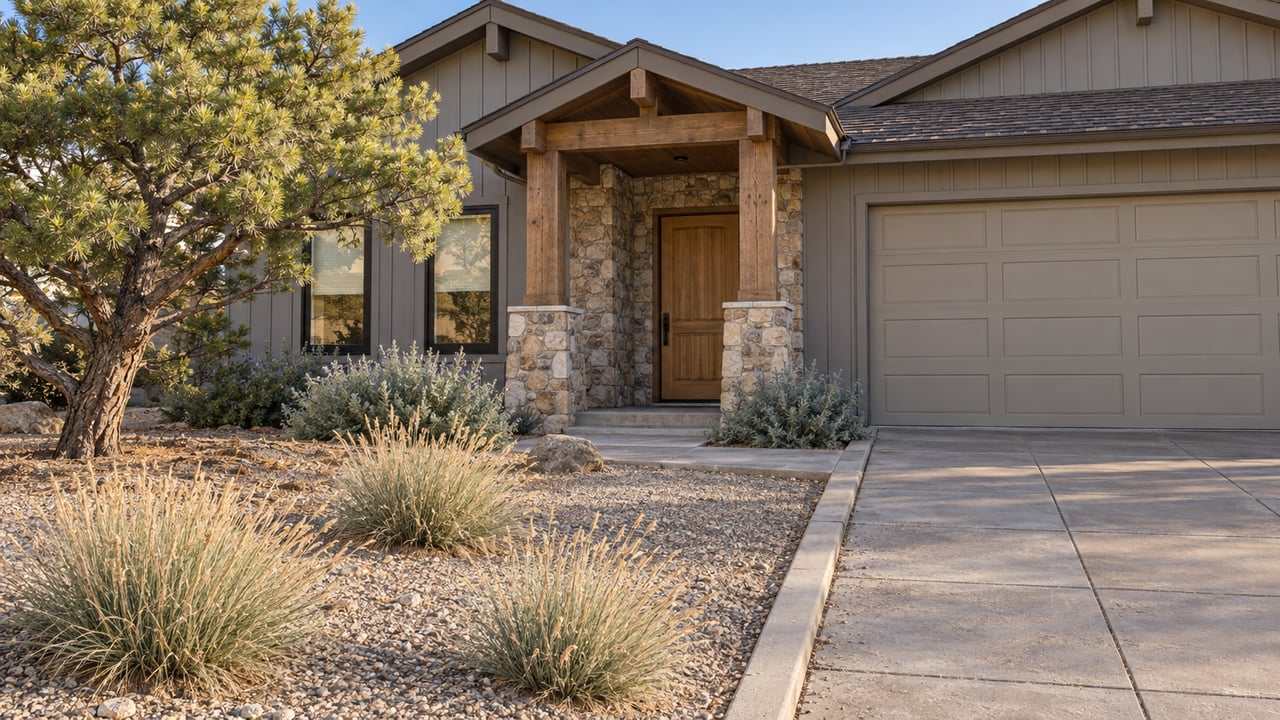

Discover Borda Crossing


Heidi McFadden Carson City Realtor®
Whether you are looking for a luxury estate or a horse property, Heidi is the specialist you need. She combines her professional real estate acumen with a personal passion for the equestrian lifestyle. Connect with her to navigate the unique Northern Nevada landscape with confidence.