Leave a Message

By providing your contact information to Heidi McFadden, your personal information will be processed in accordance with Heidi McFadden's Privacy Policy. By checking the box(es) below, you consent to receive communications regarding your real estate inquiries and related marketing and promotional updates in the manner selected by you. For SMS text messages, message frequency varies. Message and data rates may apply. You may opt out of receiving further communications from Heidi McFadden at any time. To opt out of receiving SMS text messages, reply STOP to unsubscribe.

Thank you for your message. I will be in touch with you shortly.

Guide To Buying Acreage Or Horse Property Near Carson City

March 26, 2026

Dreaming of room to roam, space for your horses, and mountain views just minutes from downtown Carson City? Buying acreage or horse property here can be incredibly rewarding, but it also brings unique due diligence around water, zoning, permits, and wildfire or flood risks. This guide walks you through what to check, who to call, and how to move from idea to confident purchase. You will leave with a practical checklist, a timeline, and trusted local resources to help you buy smart. Let’s dive in.

Quick buyer checklist

Before you fall in love with a property, confirm these items:

  • Zoning and use: Verify allowed uses, accessory barns, and when a Special Use Permit may be required for commercial activities.
  • Water source: Determine if you have a municipal connection or a domestic well, and request well logs and pump data.
  • Septic and soils: If no sewer, confirm septic feasibility and review past permits and maintenance records.
  • Permits and history: Ask for building permits and inspections for barns, arenas, and outbuildings.
  • Wildfire and defensible space: Evaluate risk and plan for clearance and hardening.
  • Flood risk: Check FEMA mapping and any elevation certificates.
  • Utilities: Confirm electric capacity, gas or propane, and past power usage for well pumps or arena lighting.
  • Barns, fencing, and arenas: Assess condition, code compliance, drainage, and maintenance needs.
  • Manure management: Understand storage or composting approach and any required plans.
  • Insurance and lending: Discuss coverage and lender requirements for rural properties early.

Zoning and permitted uses

Start with the parcel’s zoning. Carson City’s Development Code spells out where agricultural uses and accessory structures like barns and stables are allowed, and when commercial stables or riding academies need a Special Use Permit. Review the use tables and development standards in Title 18 so you know what is permitted on day one and what may require a hearing. You can find the code and district standards in the city’s Development Code Title 18 resource, including allowed uses and dimensional rules such as setbacks and height limits. Review the use tables and standards in Carson City Development Code Title 18.

If you plan to board horses for others or teach lessons for a fee, assume you may need a Special Use Permit. Conditions can include setbacks, traffic and parking plans, and manure management. Confirm whether past approvals exist and whether they transfer.

Water: wells, rights, and supply

Water is the make-or-break factor for acreage in Nevada. If the property uses a domestic well, Nevada’s domestic well exemption allows up to 2 acre-feet per year for one single-family residence. That does not mean unlimited irrigation or use for multiple homes. Review the state statute for context on the exemption in NRS 534.180.

Take these steps when evaluating water:

  • Confirm whether the property is on a municipal water connection or a private well. Check availability through Carson City Utilities.
  • Ask the seller for the well driller’s log, completion report, any pump test results, and meter readings if present. Use NDWR mapping and well logs to verify records. A helpful starting point is the state and local documentation compiled in this NDEP resource.
  • Some groundwater basins are closely managed. Always confirm current basin status and any limits on new appropriations with the State Engineer.

Septic and soils

If the parcel is not on city sewer, septic feasibility depends on soils, depth to rock, and setbacks from wells and surface waters. Request any existing septic permits, as-built drawings, and maintenance records. Carson City’s permit reviews include environmental and health checks, so anticipate that requirements may surface during plan review through the Carson City Building Division.

Soils and slope affect where you can build, the design of arena bases and driveways, and whether a leach field will work. Use preliminary tools like the NRCS Web Soil Survey and, for bigger projects, consider a geotechnical or soils report. The NDEP document above also points to regional studies and records to help you screen site conditions.

Permits and approvals

Barns, covered arenas, and large outbuildings typically need building permits. Expect concurrent reviews that may include planning, fire, engineering, and health. Commercial activities such as boarding or riding instruction can trigger a Special Use Permit with specific conditions. Review submittal steps and inspection scheduling with the Carson City Building Division and Permit Center, and cross-check allowed uses and standards in Title 18.

Risk: wildfire and flood

Wildfire and defensible space

Many Carson City acreage parcels sit in the wildland-urban interface. Plan for defensible space, ember-resistant materials, and clear emergency access. The Carson City Fire Department’s Wildland Fuels Division offers defensible-space inspections and guidance. Learn about programs and request an inspection through the Wildland Fuels Division.

Flood risk and drainage

Low-lying parcels near the Carson River or tributaries can be in FEMA Special Flood Hazard Areas, which affect insurance, lending, and building rules. Always check mapping and ask for any elevation certificates or Letters of Map Amendment the seller may have. Start with Carson City’s floodplain resources, which direct you to FEMA tools, via the city’s floodplain and mapping page.

Equestrian infrastructure essentials

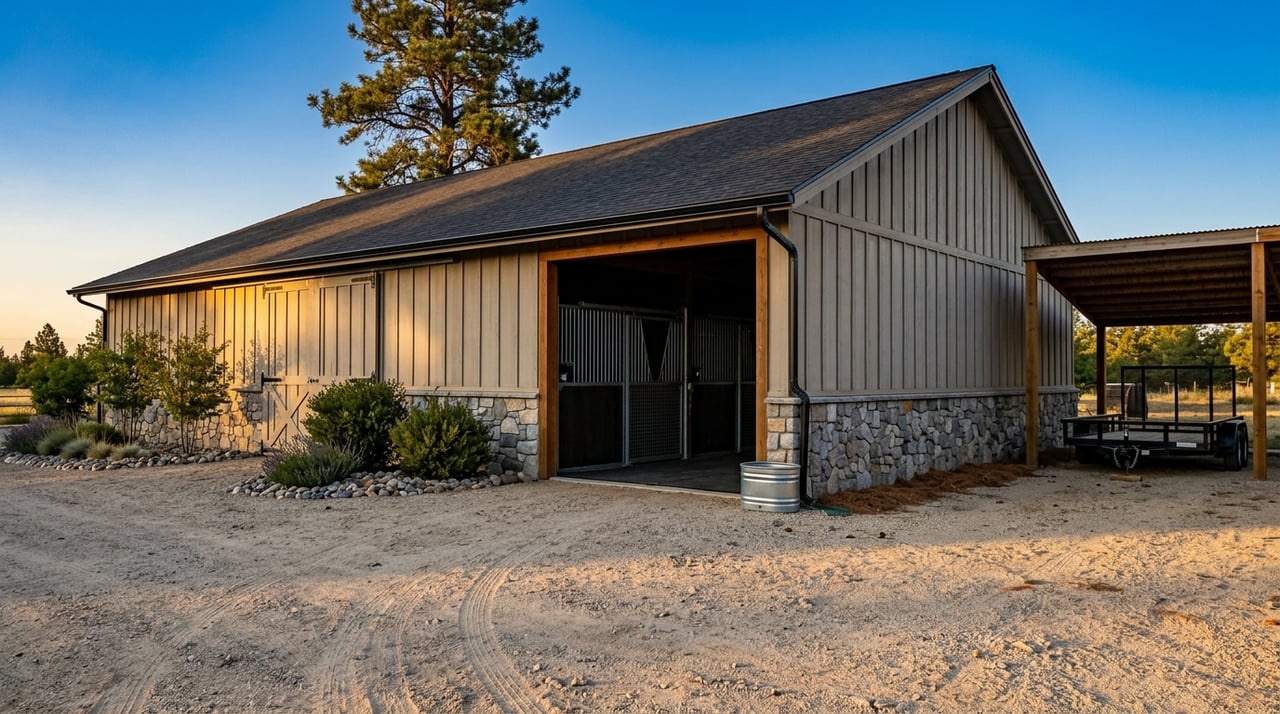
  • Barns and outbuildings: Plan for stall count and size, ventilation, electrical service, water spigots, and safe hay storage. Fire review is common for larger structures. Coordinate design and permits through the Building Division.
  • Fencing and paddocks: Match fencing type to your use and budget. Verify setbacks, easements, and right-of-way lines before you install new fence lines.
  • Arena footing and drainage: An engineered base, quality footing, and planned drainage protect your investment. Budget for ongoing dragging, topping, and dust control where required.
  • Feed and storage: Many owners rely on delivered hay. Design storage to keep hay dry and separated from ignition sources to reduce fire risk.
  • Manure management: Store, compost, or spread responsibly to avoid runoff or odors. Larger operations may have conditions tied to manure handling. The NDEP reference above provides useful environmental guidance and contacts for best practices.

Due diligence timeline

Here is a simple framework you can adapt to your goals and contract timeline.

  • Pre-offer reconnaissance

    • Walk the property with a zoning map and the Title 18 use tables. Confirm your intended use looks feasible in the district.
    • Review available well and septic records, plus any building permits for barns or arenas.
    • Check flood mapping and wildfire exposure, and plan for defensible space.
  • In-contract contingencies

    • Title and survey: Order a boundary survey if lot lines are unclear. Confirm access easements and encroachments.
    • Water: Obtain the well driller’s log, pump test, and any water-right certificates if claimed. Verify basin conditions with the State Engineer and review the NRS 534.180 domestic well rule.
    • Septic and soils: Retrieve septic permits and maintenance records, or hire an onsite wastewater evaluator if needed. Consider soils testing for arenas or large structures.
    • Permits and code: Pull the building permit history and resolve any code-enforcement items with the Building Division.
    • Risk checks: Confirm flood status through the city’s floodplain page and schedule a defensible-space visit with the Wildland Fuels Division.
  • Before close and after

    • Finalize insurance that reflects horse counts, structures, and wildfire or flood exposure.
    • If you are planning improvements, clarify permit steps and lead times with the Building Division. Line up contractors for fencing, grading, or arena work.
    • For broader groundwater context, review regional studies like this USGS groundwater study and consult with a licensed well professional.

Professionals to call

Build your bench early. These specialists can save you time and protect your budget:

  • Local land-use planner or experienced acreage broker to screen zoning and permit risk using Title 18.
  • Licensed well driller or hydrogeologist to analyze logs, conduct pump tests, and assess recharge risk. See the NDEP reference for state and local contacts in the NDEP documentation.
  • Onsite wastewater evaluator or septic designer for feasibility and repairs via the Building Division.
  • Structural or barn designer for compliant plans and cost estimates.
  • Equine veterinarian, farrier, and fencing contractor for practical horse care and facility planning.
  • Soil scientist or geotechnical engineer for septic design, arena base, and foundations.
  • Water-rights attorney or paralegal if the property claims complex rights.
  • Fire mitigation specialist and the Wildland Fuels Division for defensible-space planning.

Local resources worth bookmarking

Work with a local expert

Acreage and horse properties demand a different playbook than in-town homes. You want clear answers on water, permits, and risk before you commit, plus a plan for barns, fencing, and long-term maintenance. With deep experience in Carson City equestrian and land sales, I help you line up the right specialists, verify the details, and negotiate with confidence. If you are exploring acreage near town or in the surrounding valleys, let’s build a path that fits your goals and budget.

Ready to walk a property or talk through your plans? Connect with Heidi McFadden to start your search and get tailored guidance.
FAQs

What zoning do I need for a private horse property in Carson City?

  • Check your parcel’s zoning in Title 18 to confirm horses and accessory barns are allowed as an accessory use, and whether any conditions apply. Commercial boarding or riding programs often require a Special Use Permit.

How much water can a domestic well provide for my acreage?

  • Under Nevada’s domestic well exemption, a single-family residence can use up to 2 acre-feet per year. That limit does not cover multiple homes or unrestricted irrigation, so verify basin status and get well logs and pump data.

How do I confirm if a property is in a flood zone near the Carson River?

  • Use Carson City’s floodplain resources, which direct you to FEMA maps, and ask the seller for elevation certificates or any Letters of Map Amendment. Flood status can affect loans, insurance, and building.

Do I need permits for an existing barn or a new covered arena?

  • Large barns, arenas, and major outbuildings typically need building permits and fire review. Pull the permit history and coordinate any new submittals with the Carson City Building Division and Permit Center.

What wildfire steps should I budget for on an acreage property?

  • Plan for defensible space, ember-resistant vents and roofing, and clear access for firefighting equipment. The Wildland Fuels Division offers defensible-space inspections and local guidance you can schedule before closing.

Work With an Expert in Your Area

Whether you are looking for a luxury estate or a horse property, Heidi is the specialist you need. She combines her professional real estate acumen with a personal passion for the equestrian lifestyle. Connect with her to navigate the unique Northern Nevada landscape with confidence.